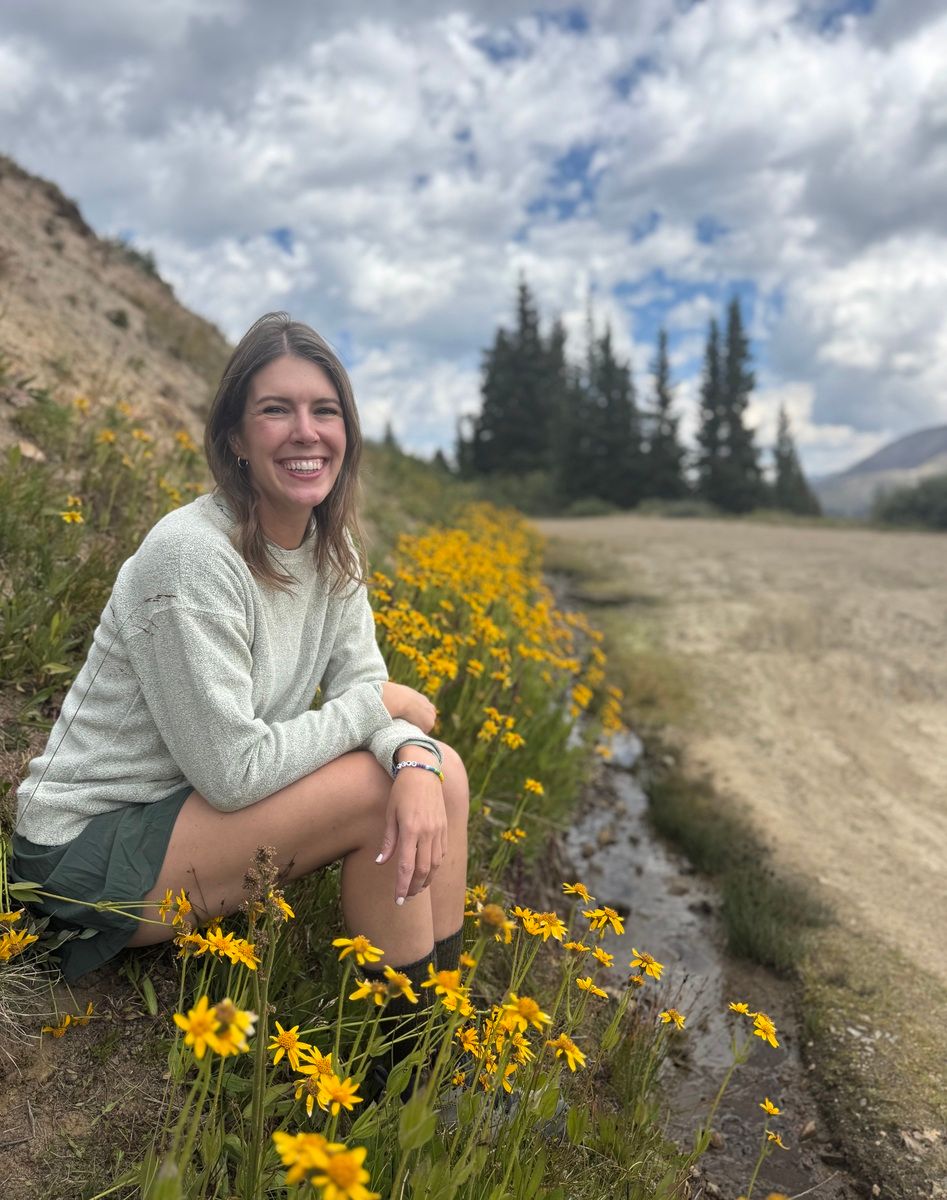
Welcome to this issue of Stumped by Nature, where we notice nature lurking just beyond our screens, curate a list of outside-y events in Austin, and build community with other folks in the thick of the startup ecosystem.

In this week’s issue:

🦬 Bison!, Part 1

👎 Human atrocities

🌤️ Upcoming outdoors events

🚗 Potential day trips

Let’s dig in!

-Nicole

PS Send this newsletter to someone who might like it. If someone forwarded this to you, sign up here!

NATURE SPOTLIGHT

I learned that if you tell the right person you like nature and you like writing, you might find yourself climbing into an unmarked van at sunrise on a Saturday to go watch a bison die.

More to that story will come next week in Part II of this bison dive.

This week, we’re looking at bison themselves, then shifting to look in wide-eyed horror at how bison went from numbers in the millions to barely a dozen on the continent.

Spoiler: humans were why, and it’s in the most atrocious way, and it’s worth some deep journaling and chatting with a therapist about.

But first, what do you know about bison?

Hello, friends!

The Details

Some logistics to orient us here:

🦬 Bison are the largest land animal in North America. Adult females weigh roughly 1000 pounds, males around 2000 pounds, and their shoulders are at roughly human eye level

🦬 Bison exist in matriarchal communities, with an elder cow leading the herd with decision-making. The head lady is responsible for directing folks toward water sources and the best slices of range to graze

🦬 Male bison mostly live in loose, semi-chaotic bachelor groups

🦬 Rutting season is when bison make more bison. To get the cow, bulls will bellow and wallow and perform feats of strength.

🦬 As they age, bulls get more rowdy about fighting other bulls than impregnating the ladies

🦬 Like chickens, bison have a pecking order. Shaped by criteria like ages, size, temperament, mothering status, there is a clear dominance hierarchy within herds, reinforced by head swinging, horn nudging, and standoffs. (Side note: why am I picturing the checkout line at Whole Foods?)

🦬 “High-tail it” comes from the way a bison raises its tail in an S-shape to indicate that, if they were skunks, they’d be spraying, but they’re not, and since you likely can’t outrun a bison’s 35 mph speed capacity or beat their 6 foot vertical, it’d be the right time to tap into all that breath work you’ve been doing while you back away slowly, ideally in a diagonal, to get behind a tree or car to defuse the situation

🦬 Bison refuse to show weakness. If a bison does show a sign of illness, you can expect it to be dead within 12 hours. Perceived weakness would put a target on its back, and the herd will cull any risk. How high the walls we build to suffer alone!

🦬 Bison can stand within two minutes of birth, and can run at pace with the herd within seven minutes

🦬 Calves get the zoomies, especially when temperatures fluctuate

Prairie Ecology

This get us to a crucial detail: bison are precisely evolved to cultivate the land.

(Taking a deep breath for this soapbox I’m climbing on:) From cloven hooves to their seed-grabbing fur, bison are powerhouses in the prairie ecosystems, spreading seeds as mega-sized pollinators, and also embedding seeds into the soil when they wallow on the ground.

More keywords here include luring in bugs and birds with their dung and grazing patterns, and being a central component in an ideal biodiverse prairie culture.

When prairie lands thrive, plant root systems can collect and store more water, which means the prairie can better sustain during drought. With capacity for water resources, the vitality of the land permits long dormant streams to flow again. Re-read that. Revitalized land makes water happen.

It’s absolutely wild, the ecology of bison and prairie. I dig deeper into this concept in a forthcoming essay—stay tuned for that publication to go live. Also, next ice breaker that involves my ideal super power, it’s 100% being able to nourish the earth by wallowing in the soil.

Identity Crisis

What is a buffalo?

It’s a bison. Scientific name of plains bison: Bison bison bison.

There are legit buffalo, but they’re not in North America.

And so bison/buffalo is an interchangeable misnomer, with origins dating back to settler-era. Someone was technically wrong in a very enduring way.

Add some Gene Gentry for a rousing batch of “Home on the Range”, and we’re doomed to repeat the linguistic sins of our predecessors.

I wish this were the only human atrocity I would have to mention in today’s newsletter, but there’s more horror to come.

Meet Buffalo, a bison in the wild of school drop off

Cultural Stalwarts

Culturally, once you start noticing bison, they’re quite present. They’re in your very Texan friend’s powder room. They’re around the dinner table at a gala. They’re on the calf of a man at the gym. They’re on the coffee mug that a friend gifted you a decade ago that you only noticed differently last week.

Bison have been bound to this land for 200,000 years, shaping ecosystems long before humans arrived. By the time Indigenous Nations entered the scene, maybe 20,000 years ago, bison became the backbone of life itself, influencing economics, spiritual traditions (the bison lore!), migration patterns, and hunting technologies. Some Nations recorded more than 87 non-food uses of bison. No North American creature shaped human civilization so thoroughly.

And Texas? Texas was a full-blown bison metropolis, home to 10-15 million grazing, thundering creatures.

Was.

Past tense.

Enter: 1800s settlers.

Exit: you from this newsletter if you’d prefer to have a lighter day.

Humans thoroughly ruined the party.

Because bison didn’t co-evolve with humans (see: ancient generational plains presence), the pop of a gun registers akin to thunder, not threat, and so, unlike deer et. al, bison don’t flee.

Add some Manifest Destiny, and we’ve got mass slaughter to the brink of extinction for these quite peaceful, ecosystem superstars.

And so, a short list of huge atrocities:

  1. Railroad companies brought hunters in (each of which could kill 10-50 bison/day) and the railroad companies shipped hides out. These shooting-from-train-window tours were accelerants in the collapse of the species

  2. But why, you may ask, would people want to kill so many bison?
    Oh, you know. It was an intentional U.S. Army-led and government-reinforced effort to eradicate the primary source of food for Indigenous populations. This was ecological warfare, and without bison, tribes starved, had no choice but to surrender, and were much more easily forced into reservations.

The strategic policy worked.

By worked, I mean it:

  • Obliterated tribal food systems and economies

  • Left bison carcasses to rot, while their bones were later shipped east by the millions of tons

  • Destabilized prairie ecosystems

  • Collapsed predator populations

For both bison and Indigenous people, there had been centuries of decline since initial colonial contact, but the 1800s delivered a 15-year sprint toward catastrophic collapse.

Bison went from millions to a couple dozen.

Indigenous populations fell from roughly 250,000 to fewer than 2,000 people in roughly the same era.

TL;DR: People can really, spectacularly, knowingly suck.

The Comeback

The only reason the species still exists is because a handful of ranchers and a few Indigenous families intervened. Charles and Molly Goodnight receive the most named credit—they pulled a few orphaned calves out of the Texas Panhandle and quietly built a refuge that kept the Southern Plains lineage alive.

Through their work and the parallel efforts of others, conservation breeding slowly rebuilt the population. Today, our bison bison bison buddies number around 500,000.

See? Sometimes people actually do good things.

TL;DR: People can do good in the world if they have interest, bandwidth, and resources to make it happen.

Glancing Ahead

For Bison, Part II next week, we’ll pivot to the less societally sadistic corners of bison/Indigenous/Texas history, including some glimmers of hope.

Side note: I would like to formally lodge a complaint with my public school education system for absolutely dropping the ball on addressing the sweeping genocides of American history.

Another side note: Did y’all know this (gestures broadly) already? Writing this felt like a constant unspooling of things that seem ripe for compartmentalization.

Related side note: Good news! I’m on track to meet my annual existential crisis quota!

UPCOMING EVENTS

🗓️ November 21 Butler Trail Bird Walk : Just think of the bird variety potential with that proximity to water!

🗓️ November 22: Who-Liday Holiday : Big on the Grinch, with crafts + photo opps + a flagrant disregard for Thanksgiving

🗓️ November 22-23 The Front Market : a great excuse to visit Waterloo Park

🗓️ Through November 23: A Christmas Affair: Not nature-based, but worth being indoors for these curated market days

🗓️ November 27 HEB Turkey Trot Should I be alarmed that this feels really tempting this year?

🗓️ November 30 Wellness Sunday at Alpaca Playhouse: You read that right. Alpacas.

🗓️ Through February 1: Fortlandia at the Wildflower Center. FWIW this is fully endorsed by my children. And me. The plants!

DAY TRIP

🚗 November 23 : Turkey Harvest day at Roam Ranch : Here’s a chance to reconnect with your land and what you consume!

🚗 Through November 30: Texas Renaissance Festival: Just think of the people watching

🚗 Through November 30: Jurassic Jamboree Dino Fest at Sweet Eats just up in Georgetown. Kid-friendly, but zero shame for grown adults with a strong proclivity for dinosaurs

🚗 Caprock Canyons State Park 1. It’s beautiful. 2. It’s home of the heritage herd of free ranging bison.

LOCAL FARMERS’ MARKETS

👩‍🌾 Arboretum Food & Artisan Market Saturdays 11-3

👩‍🌾 Barton Creek Farmers Market Saturdays 9am-1pm

👩‍🌾 Lakeline Farmers Market Saturdays 9am-1pm

👩‍🌾 SFC Farmers’ Market Downtown Saturdays 9am-1pm

👩‍🌾 SFC Farmers’ Market Sunset Valley Saturdays 9am-1pm

👩‍🌾 Texas Farmers’ Market at Bell Saturdays 9am-1pm

👩‍🌾 Texas Farmers’ Market at Mueller Sundays 10am-2pm

HOMEWORK

Sing “Home on the Range” to yourself while you fold your laundry this week.

That’s all for this week! 

In the meantime, I hope you cultivate the land with your cloven hooves.

-Nicole

OPTIONAL SIDE QUESTS

🪵 What’s this like for you? Email with your perspective.

🪵 Who should I collaborate with? Email with your recs!

🪵 Is this newsletter not your vibe? Forward it to your enemies to make them suffer too.

💰It’s safe to assume there are affiliate links, and I’ll monetarily benefit from any purchases you make. Hooray, capitalism! So far, this newsletter has generated $1.31 of cold hard cash. 💸

Keep Reading