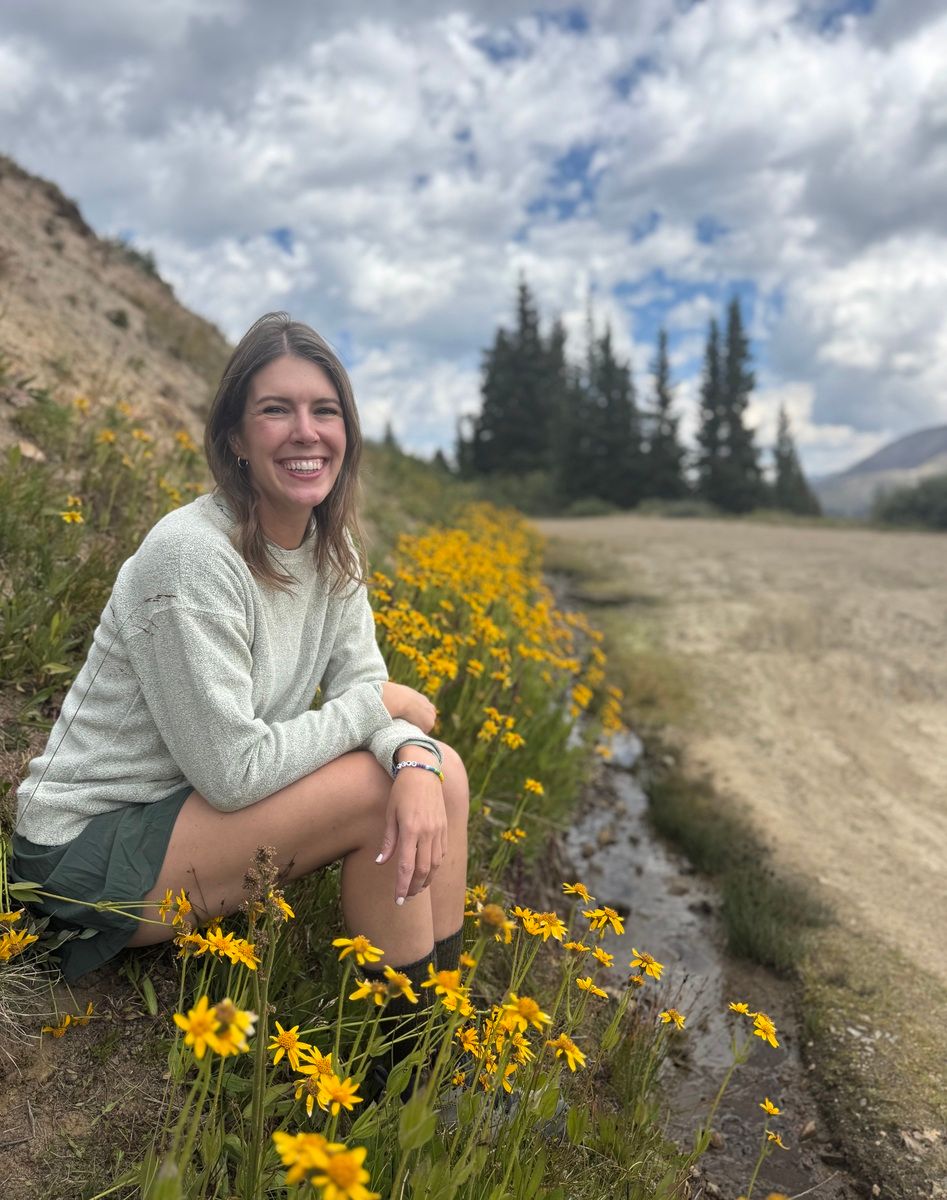

Welcome to this issue of Stumped by Nature, where we notice nature lurking just beyond our screens, curate a list of outside-y events in Austin, and build community with other folks in the thick of the startup ecosystem.
In this week’s issue:
🦇 Bats!
🌤️ Upcoming outdoors events
Let’s dig in!
-Nicole
PS. ATX Outsiders is our community where people get to know each other IRL outside each month. Join us!
Upcoming events:
Sunday, August 30: Reverse Brain Rot: We’re sprawling with books and notebooks at Barton Springs
Monday, August 31: Austin Reading Club. Convos were so engaging after the last one, we shut the venue down

Books posing at the August 10 reading club photo
NATURE SPOTLIGHT
You know those times when you’re out in Austin, and you meet someone who mentions their work, and you say What? Really? and Tell me everything?
Skip Hobbie’s job is Bats.
And, not that it’s a competition and I bet your work is cool too, but Bats is pretty hard to beat.
Today we’re hanging out with bats.

And Skip.

To start, I peppered Skip with questions.
The first: I didn't know someone's job could be Bats. How did this happen?
Professionally, really I am just a wildlife cinematographer, who happens to love bats. While I have always loved all animals, and have always especially taken a shine to the under-appreciated critters and creepy crawlies, I can't say that I was always obsessed with bats the way I am today.
Being from Austin, as my early career took off working on documentaries for National Geographic and traveling the world, the only times I ever got asked to stay at home and film something here, it was always either the bats here in Austin at the Congress Avenue Bridge (This was for a BBC David Attenborough series about Mammals - 3mins) or Bracken Cave, the world's largest bat colony, which is just north of San Antonio (there's a 14min scene in Deep in the Heart)
That was my gateway to professional obsession. We've all seen hundreds of films about Lions of the Serengeti, but there are over 1,500 hundred species of bats worldwide! Our ecosystems would collapse without them, and yet, we rarely see bat stories in wildlife documentaries. So I saw filming bats as both a professional opportunity and a fun challenge.
The reason bats don't get the love they deserve and the reason they are so hard to film go hand-in-hand. They are fast, secretive, nocturnal flying creatures. Us humans have a tendency to fear what we don't understand, and what could be more mysterious than these little creatures who are everywhere, but rarely seen by people.

My amateur screenshot of Skip’s David Attenborough bat collab
And the second: Could you share a few of your favorite bat facts?
I'm obsessed with the staggering diversity of bats out there. Leaf-nosed bats (Phyllostomidae), who are only found in the new world, are one of evolution's fastest experiments in reinvention. In just the last 25 to 30 million years, from a single ancestor, this family now includes fruit bats, fishing bats, vampire bats, insect hunters, nectar sippers, and even bats specialized in hunting frogs. Few animal groups on Earth pack so much dietary / ecological range into so short an evolutionary span.
And bats are really important to modern medicine! A lot of misinformation and fear surrounds bats and disease because they have got such incredible immune systems. Rather than fearing them or blaming them for spreading diseases, which in cases like Covid was disproven, bats need to be studied and celebrated because they could unlock the future of human health!
Flying is intense behavior, so bats don't suffer inflammation like most other mammals have, which may have led to their ability to harbor viruses and rarely get sick. That probably explains also why some species, like our Mexican free-tails at the bridge and other big Texas bat caves, can live stacked right on top of each other with millions of their neighbors.
Beyond their immune systems, nectar bats live on a diet of nearly entirely sugar, but they never get diabetes. Vampire bats anti-coagulant saliva has already been used to create drugs that help stroke patients. Bats rarely get cancer, and live staggeringly long lives for such small animals. Some bats banded by scientists have been recaptured in the wild 30-40 years later! Most similarly small mammals like a mouse live 2-3 years. Not only is that a staggeringly long life, but we’re not talking about some toothless, old former matriarch lioness limping around at the ripe old age of 11 or 12 years old. We're talking 40-year-old bats are out there still flying around all night hunting insects. It'd be like 90 year old humans running marathons daily.

Which naturally led me to dig around to learn more:
Mexican free-tailed bats (Tadarida brasiliensis) have pug noses, wrinkly lips, a tail, and a built in brush on their fifth toe from grooming, and their ears are expressive.
Bats are nocturnal. During their night flights, they are hungry hungry hippoing large quantities of insects. Like, 10,000-30,000 pounds of bugs, with a specific interest in moth-eating
One of their dietary choices is corn earworm moths, which is an insect that’s an environmentalist’s major ick—corn earworm moths are highly destructive to corn crops. Skip shared “just our bats in Texas save farmers an estimated $1.4 billion each year in crop damages and savings on harmful pesticides that would end up in our water and soil.” Hooray bats. Boo corn earworm moths
Side note: speaking of destructive moths, my official pantry moth update is I wish it were humane to borrow a bat—I’m still in pantry-crisis-mitigation mode after a few hatching cycles + surprise crown molding larvae discoveries. Persistent, prolific, resilient little pantry moth nemeses.
Bats find insects by echolocating. This means they project ultrasonic waves through their mouths or noses, triangulating the bounceback from 20 to 75kHz calls to navigate total darkness and track fast-moving insects. They’ll blast up to 200 sounds per second in shifting frequencies in a “terminal buzz” to snatch prey mid-flight.
When they’re in search mode, they use lower, constant-frequency slant calls, and as they hone in, they modulate and increase density to lock it in
Bats are competitive for food, so they’ll emit a jamming ultrasonic signal to disrupt rival bats from targeting
because bats have preyed on moths for millions of years, moths have evolved to have exceptional hearing, using receptor hairs and tympanal organs to detect echolocation blasts
Bats also vocalize in multi-syllabic songs, aggressive territorial buzzes, and mother-pup directive calls

Bat poop is called guano. If you crush the burnt-rice-looking pellets, you can find shiny insect parts in the dry powder. This is a great fertilizer, and not something you want to inhale in mass quantities indoors
I heard a rumor that guano is used in mascara, but the ingredient is actually guanine, a natural crystalline compound that creates an iridescent effect. Guanine is more likely to be harvested from commercial fish scales than bat droppings, but most likely: mainstream beauty brands rely on synthetic pearls, mica, or bronze/aluminum particles for the shimmer
Bat poop does have active Streptomyces bacteria, which serves as a biological template for modern antibiotics
If you’d like to smell guano, you sure can at the Congress Bridge
I needed to know why bats hang upside down. No shade to bats, but they skipped leg day. Their slender hind limbs can’t support their weight in an upright position. Good news: they don’t need to be upright. Their anatomy is made for dangling—their bodyweight pulls on tendons to automatically close their claws.Their toes stay clamped shut even while sleeping or hibernating, and most bat breeds require a drop-down takeoff (and cannot launch from a flat surface).

Austin-Specific Bats: A History
Austin is home to the world’s largest urban bat colony, with 1.5 million Mexican free-tailed bats who call Congress Bridge home. It’s a Significant Bat Area.
Like the night shift to Purple Martins’ day shift, bats’ roosting patterns are visible on weather radar
Congress Bridge is specifically a maternity colony, with almost entirely pregnant and nursing female bats and their pups. 750,000 pups are birthed and raised at Congress Bridge each year.
Mating happens between August and October before they go to sleep for the winter. They wait to jumpstart the eggs until spring. Females have one pup, born in late May or early June.
Males have a separate, smaller bachelor colony, and the internet didn’t tell me where—do you know? What are they up to in their secret crevices?
Austin got its reputation as Bat City because of a renovation to Congress Bridge in 1982 created an ideal, cave-like habitat for bats, with crevices ¾ to 1 ½ inches wide and 16-18 inches deep. Turns out bats love dark, warm, narrow roosts

Merlin Tuttle took up the bat mantle around that time when folks got scared, with newspaper headlines saying things like “Bats Sink Teeth Into City”. He knows things about bats, and shared that knowledge
Tuttle’s educational approach led the Texas Department of Transportation to evaluate which state-built bridges and culverts could be used as man-made bat roosts
Their Austin emergence season is right now: March through November. Cooler fall weather is their cue to migrate to Mexico
Timing-wise, bats emerge 30-40 minutes +/- sunset, depending on weather conditions
Timing-wise, this means tourists get to enjoy full summer sweat to witness the bridge outpouring of bats. An estimated 150,000 tourists bring as much as $10m to Austin every year
After bats woo the bridge audience, they fly up to 60 miles a night, as high as 10,000 feet up, and at a speed that can hit 60 miles per hour


Which leads us to why Skip’s current work is Bats.
The problem: we have crowds flocking to Austin to watch bats, but their takeaway is currently awe + sweat.
Skip and Bat City partners are crafting that experience so it’s awe + sweat + practical education about our nocturnal buddies before, during, and after a Congress Bridge experience.

So there are ways to participate in Austin’s present and future bat culture:
Check out Bat City’s crowd funding campaign.
Skip’s video explainer includes clips of bats flying in slo-mo, and I understand now that I don’t understand bat flight physics. Donation perks include parking discounts, and, you know, supporting bat facts.
All this to say, if you can top Bats as work, do let me know.
UPCOMING EVENTS
🗓️ August 13: Campfire: pitchless potluck
🗓️ August 14: Ikebana: we both know flower arranging is cool af
🗓️ August 14: FoundHer's Walk & Talk: plunk into the community
🗓️ August 15: Austin Ruck Club: make your walk even more load-bearing
🗓️ August 15: Board Walks: what question have you been stewing over?
🗓️ August 15: National Geocaching Day: this treasure hunting is still a thing
🗓️ through August 15: Zilker Summer Musical: Singin' in the Rain: last chances this week!
🗓️ August 16: Writers Walk: stroll with the creatives
🗓️ August 17: Late on the Lake: Jaws: It’d be hard to have a better floating movie choice
🗓️ August 18: Seed Starting Workshop: growing into fall starts now
🗓️ August 18: Hill Climbers Tuesday Ride: early AM wheels down
🗓️ August 18: Out in Tech ATX: time for the monthly rally
🗓️ August 19: Great Hills Walk and Talk: folks in the NW Austin pocket, gather round
🗓️ August 19: Thought Experiments on Patios #5: think with people
🗓️ August 26: Writing Poetry with Scientists: Maybe you’ll get lucky with the waitlist?
🗓️ August 26: Bat Boat Cruise for Merlin Tuttle Day
🗓️ August 27: Bat City Film Night: Panelists include Skip Hobbie + Ky Harkey of The Visitor Experience (Ky’s an ATX Outsider!)
🗓️ August 30: Reverse Brain Rot: An ideal Sunday morning
🗓️ August 31: Austin Reading Club: Fun fact: you’ll love it
Should we have a bats-watching event?
That’s all for this week!
In the meantime, I hope any renovations you make create an ideal habitat for some unexpected environmental delight.
-Nicole
OPTIONAL SIDE QUESTS
🪵 Need to metabolize something? I help people think and write. Let’s chat.
🪵 Are you looking for a community of people in the startup ecosystem who go outside together? I’ve got you.
🪵 Speaking of, I chatted about local community building on this thing called a podcast
🪵 Are you sitting on a misogi-esque story? Spill.
🪵 Follow my calendar to know when we’re rallying.
🪵 I also write essays: this one is about witnessing a bison harvest.
🪵 Is this newsletter not your vibe? Forward it to your enemies to make them suffer too.
💰It’s safe to assume there are affiliate links, and I’ll monetarily benefit from any purchases you make. Hooray, capitalism! So far, this newsletter has generated $4.48 of cold hard cash. 💸