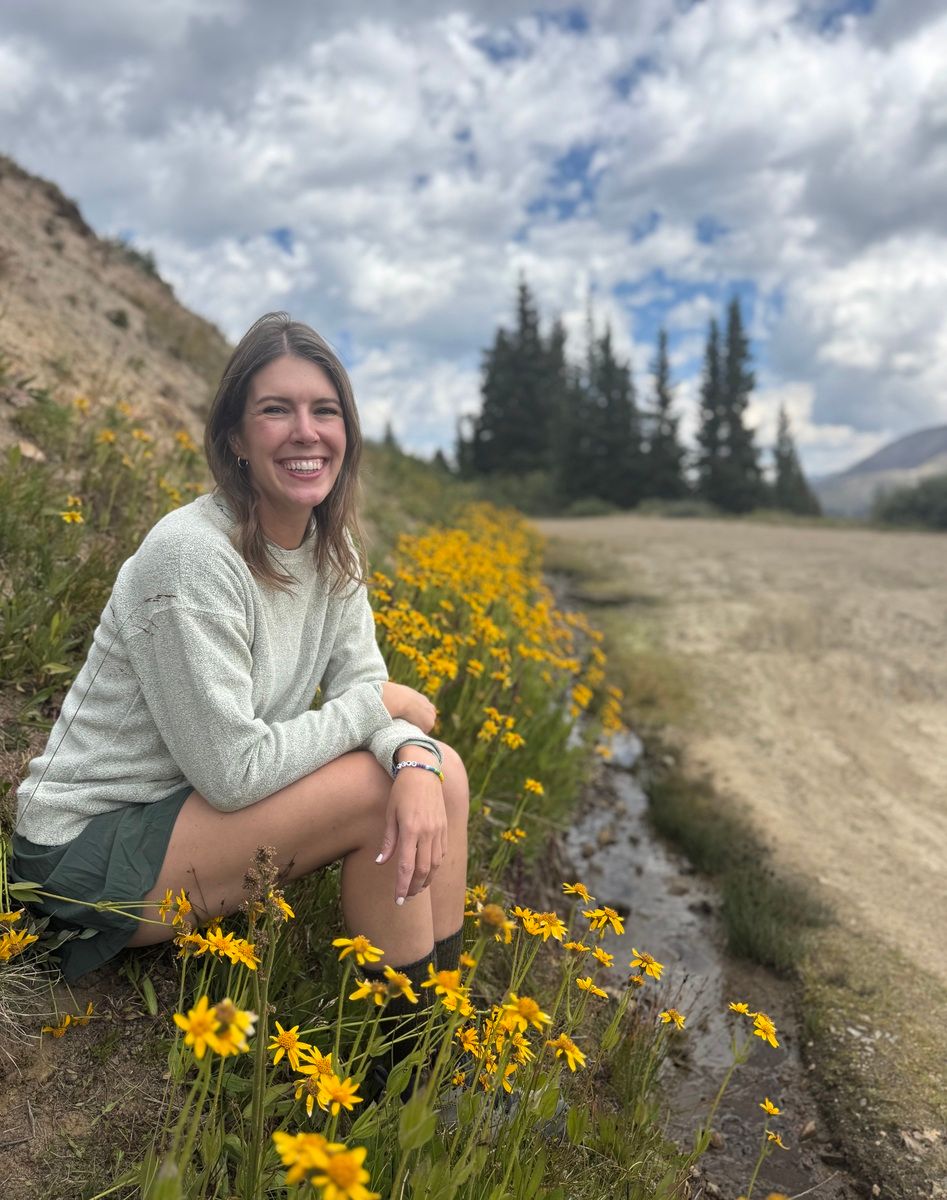

Welcome to this issue of Stumped by Nature, where we notice nature lurking just beyond our screens, curate a list of outside-y events in Austin, and build community with other folks in the thick of the startup ecosystem.
In this week’s issue:
🌱 Invasive species
🌤️ Upcoming outdoors events. A whole lot of them.
Let’s dig in!
-Nicole
PS. You read a nature newsletter. You probably want to get outside more than you do. ATX Outsiders is the community that closes that gap—Austin business leaders and creatives who get outside together. We’re officially live. You should join us.
NATURE SPOTLIGHT
Some plants are here to thrive in community.
And other plants are gobbling up resources on a quest for total domination.
Today we’re considering invasive species—the plants who left biodiversity fully off the agenda, smother canopies, hoard water, and spread their nodes at the slightest provocation.

Not today, Satan
Quick orientation: not all non-native plants are bad, we’re looking for progress, not perfection, and a solid C+ effort is an improvement. And a native pollinator garden that earns a yard-of-the-year award is not terribly far out of reach.
In a happy coincidence, the Native Plant Society of Texas is flagging next week as kickoff for The Big Pull to celebrate National Invasive Species Week.
Today we’re looking on the land, the sea, the sky for species on the naughty list, and what’s being done about them. (Behind the scenes, I tried to make this a Paul Revere allusion, but alas, Taylor.)

Invasive Plant by Land: Johnson Grass, Sorghum halepense
It started with decent intentions. Introduced from Turkey in the early 1800s as a forage crop, named after Colonel William Johnson who planted it enthusiastically on his Alabama river-bottom farm, it then spread with an unexpected fervor. By 1900 it was the subject of the first U.S. federal weed control funding. What a dubious legacy.
If Johnson grass were a Pokémon card, its Spreading Power would be off the charts. Seeds stay viable in soil for up to 20 years. The rhizomes (the underground, horizontal stems) reproduce from even small fragments left behind after pulling or tilling. One plant can colonize an area up to 200 feet wide.

Johnson grass rhizome, unearthed
It does have a narrow, genuine use. Johnson grass establishes quickly, which helps with erosion control on disturbed soils, which is why it’s still used in state highway seed mixes.
But it produces allelopathic compounds that actively suppress neighbor plants, outcompete native grasses, and reduce a diverse plant community to monoculture. Monoculture is not the ticket to thriving—an ecosystem is resilient when there are different root depths, bloom times, and soil relationships working together. Johnson grass collapses that complexity.
And so, eradication efforts. On Monday, I joined a batch of Master Naturalists at Jacob’s Well to rip Johnson grass out of the ground.
A challenge here: grasses, to an untrained eye like mine, look extremely similar.

There’s Johnson grass in this photo
And so, a lot of questions to see the world differently, more precisely.
A telltale spiraling plume. A woodiness to the stem. A white midrib that I don’t think I ever actually noticed. The way it interacts at the soil level—one solitary stem island, not like the native grasses that have big clusters of many stems sharing a space.

Education and eradication
Armed with Hori Hori, we went to work, finding the plant (turns out, they’d conquered the field, so there were huge, trailing clusters), tracing the roots, plucking rhizomes as if they were carrots, and stuffing them into our haul-away buckets.

This photo contains Johnson grass, but also things like star jelly, star moss, and “don’t even get me started on lichen”
The conversations were what you’d hope for while toiling in a field—a beekeeper marking the passage of time via space shuttle explosions, an annual pilgrimage to the Whooping Crane festival in Port A, a boyfriend who consumes honey in truly alarming quantities, the beauty of the swirling Johnson grass plume, an empathy for its ecologically hazardous inclinations.

The impact of nine volunteers over two hours
Invasive Plant by Sky: Nandina/Heavenly Bamboo
Nandina is not bamboo. It’s also not heavenly.
You’ve walked by nandina. You may even have it in your landscaping. Developers reach for it reflexively—it’s evergreen, cheap, low-maintenance, photographs well at closing, and is available in bulk. It’s a standard foundation planting in new construction across Central Texas, and it’s still sold in nurseries without much said for its consequences.

Foe
The problem is the berries. Birds love ‘em. But they’re toxic. Cedar waxwings are notorious nandina gobblers, and these migratory birds are particularly vulnerable to fatal poisoning. Because birds distribute the seeds, nandina keeps expanding—more plants, more berries, more poisoned birds.
A better choice exists: yaupon holly. Similar red berries. Loved by pollinators. Berries not toxic to birds Leaves naturally caffeinated and a solid foraged tea choice.

Bonus: Invasive Creature by Water: Zebra Mussels
You’ve seen these in the news. If you’ve had a dog near Lady Bird Lake in summer, you already know the downstream stakes.
Zebra mussels are razor-sharp, fingernail-sized mollusks that arrived in North America in the 1980s and hit Austin’s waterways when boaters didn’t clean, drain, and dry their gear. By 2017 they had colonized Lady Bird Lake. The mussels themselves aren’t directly toxic, but they know how to ruin the party.

Zebra mussels filter out the good algae and leave the blue-green type, which they won’t touch. Cleared of competition, the cyanobacteria blooms. Those blooms at Red Bud Isle made national news in 2019 when they killed dogs within hours of exposure. The neurotoxin involved is known for its very fast death factor. Not good.
Once established, zebra mussels can’t be removed. The only hope is prevention.
So now what
The through-line here: Johnson grass and nandina both arrived with decent intentions. And now we’re in an ecological pickle. (Mussels arrived because of industrial ballast water hitchhiking, but that was the 80s, a pre-Uber time.)
We live in a world that’s both delicate and hardy, and it takes effort, small spheres of influences, and individual ownership and autonomy. The small work adds up. The big work compounds. But it’s gotta be collaborative.
The individual work matters. Pull Johnson grass before it seeds, get as much root out as possible, and know you’ll be back. Cut nandina berry clusters before they mature (we’re in an ideal window for this now). Clean, drain, and dry every time you leave any body of water. These are small responsibilities for living in an ecosystem.

But only doing bottom-up work can feel futile when top-down efforts operate against the grain. So there’s crucial work at a higher level. Johnson grass’s attendance in state highway seed mixes means our tax dollars are funding its mass distribution. Nandina is sold in bulk to developers, making it an easy, unchallenged default across entire subdivisions. The scale of harm scales with the scale of construction.
There are (seemingly) straightforward adjustments: replace Johnson grass with native erosion-control alternatives. Stop selling nandina in bulk. Design new residential landscapes without invasive species. Reduce friction for hull cleaning. Enforce boating regulations.
The volunteer crew at Jacob’s Well have been pulling Johnson grass for three years. Another invasive rooted into the newly cleared soil almost immediately. Incremental work, collaborative effort, and a steady plod toward thriving diversity doesn’t have a clean finish line. The crew will be back next year.

For more local terrors and what to do about them, feast your eyes on these resources:
Native Plant Society of Texas’s Top Offenders list. We’re in the Edwards Plateau ecoregion
Texas A&M Forest Service’s Invasive Plants in Central Texas
City of Austin Invasive Species Management Plan Field Resources
UPCOMING EVENTS
🗓️ February 20: Violet Crown Trail Cleanup: starting at the Spyglass Trailhead
🗓️ February 21: Austin Ruck Club: post-ruck Barton Springs dip encouraged
🗓️ February 21: Bloom & Groom: Weeding the 290 Pollinator Garden
🗓️ February 21: Sculpture Garden Storytime
🗓️ February 21: The Board Walks Stroll with life’s big questions
🗓️ February 21: Intro to Archery: Let Lockhart lure your inner Robin Hood/Katniss Everdeen
🗓️ February 21: Tillery Street Grand Reopening: Expect plants. Dog friendly.
🗓️ February 21: Star Party: There’s a lot going on up/out there. Check it out with the pros from Austin Astronomical Society
🗓️ February 22 Lunar New Year Party at Craft Pantry
🗓️ February 22: Craters on the Moon, Jupiter, Star Clusters: at Reimers Observatory
🗓️ February 23: Waterloo Greenway Spring Park Prep: Whip out your gardening fashion to cut back herbaceous perennials and groundcover to prep the park for the season
🗓️ February 25: Sprouts at the Wildflower Center for the 3-5 year old child(ren) in your life
🗓️ February 26: AfterSchool: Autographic Environments: This is going to be a fascinating one—join a landscape architect/horticulturist and an anthropological researcher/artist in a conversation. Hosted in a bookstore that promotes leastsellers.
🗓️ February 26 and March 1: Birdwatching at Hornsby Bend: History and Habitat Workshop:
🗓️ February 28 and March 1: Heart of Texas Regatta: Boat races, coming to Lady Bird. Race if you’re inclined, or sign up for volunteer shifts.
🗓️ February 28: Backyard Chickens 101: Live your best chicken tender life
🗓️ Through March 8: Tulip Festival & Baby Animal Days: You have permission to cancel whatever plans interfere with getting up to Georgetown for this event.

LOCAL FARMERS’ MARKETS
👩🌾 Arboretum Food & Artisan Market Saturdays 11am-3pm
👩🌾 Barton Creek Farmers Market Saturdays 9am-1pm
👩🌾 Lakeline Farmers Market Saturdays 9am-1pm
👩🌾 SFC Farmers’ Market Downtown Saturdays 9am-1pm
👩🌾 SFC Farmers’ Market Sunset Valley Saturdays 9am-1pm
👩🌾 Texas Farmers’ Market at Bell Saturdays 9am-1pm
👩🌾 Texas Farmers’ Market at Mueller Sundays 10am-2pm
That’s all for this week!
In the meantime, I hope you share the resources in your ecosystem so both you and your community can thrive.
-Nicole
OPTIONAL SIDE QUESTS
🪵 Are you sitting on a misogi-esque story? Spill.
🪵 Do you need to commission a writer? I’m happy to discuss projects that might make me cry in public/funnel my experiential/existential dread into essays like this one.
🪵 Is this newsletter not your vibe? Forward it to your enemies to make them suffer too.
💰It’s safe to assume there are affiliate links, and I’ll monetarily benefit from any purchases you make. Hooray, capitalism! So far, this newsletter has generated $3.46 of cold hard cash. 💸