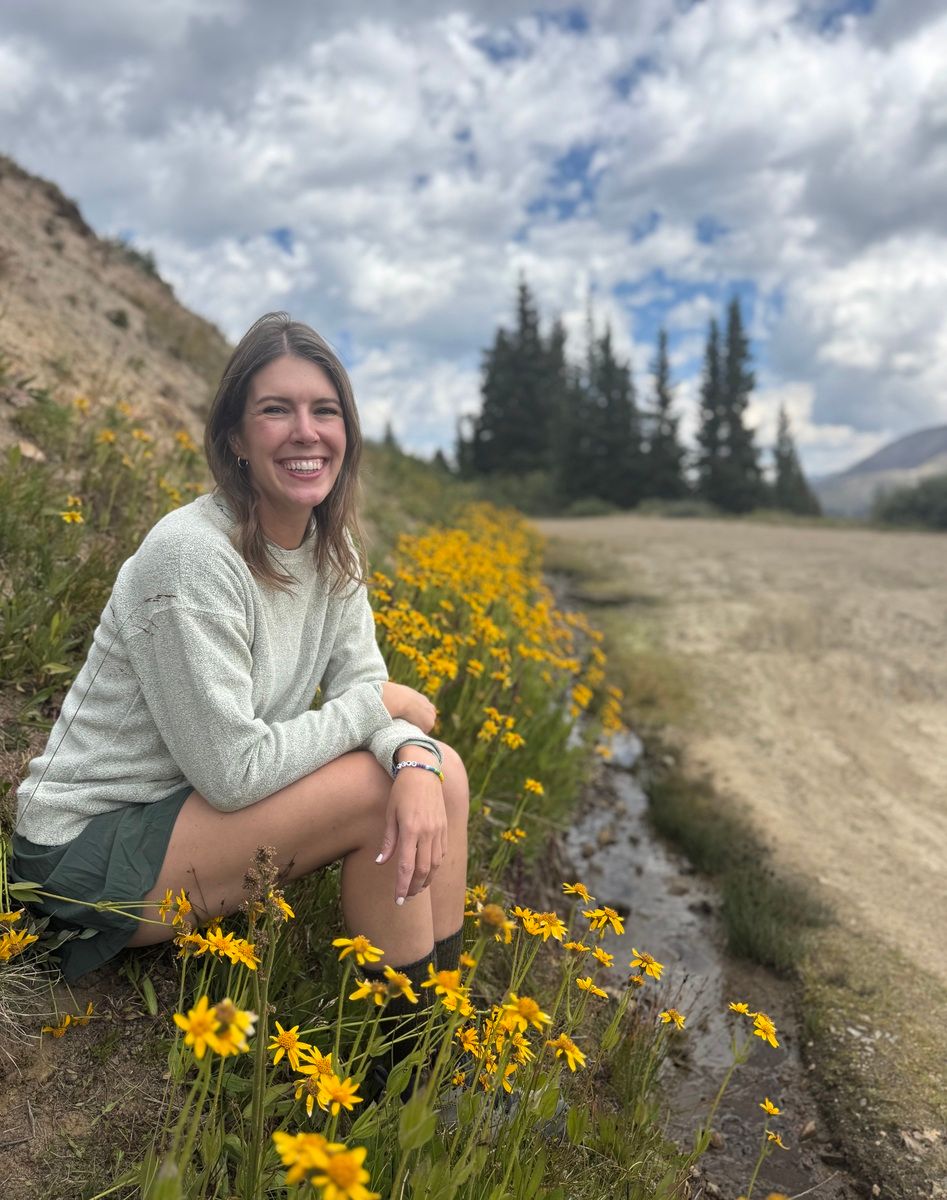

Welcome to this issue of Stumped by Nature, where we notice nature lurking just beyond our screens, curate a list of outside-y events in Austin, and build community with other folks in the thick of the startup ecosystem.
In this week’s issue:
🔦 What UV light can reveal
🌤️ Upcoming outdoors events
🚙 Adventures just beyond Austin
Let’s dig in!
-Nicole
PS. We have a community of nature-curious Austinites. Two current ways to play:
Come out to Linocut Printmaking 101 on Tuesday. Art skills not required. Sign up HERE!
Our ATX Outsiders community is ready to go outside together. Join us.

What we’re talking about when we’re talking about linocut.
📸 Amber Byfield, cohost of Linocut Printmaking 101
NATURE SPOTLIGHT
What happens when a biomimicry researcher gathers a room full of biologists, a mycologist, and systems-thinkers for a 24-hour design charrette?
Lots of awe.
Lots of curiosity.
And a collaborative way of seeing the world differently.

Biomimicry is a new word in my vocabulary, and it means using 3.8 billion years of nature’s R&D to sustainably solve the world’s complex problems. What a treat to have language for a concept that feels compelling and familiar, and for a scientific way of declaring we don’t have to reinvent the wheel. We just have to notice and be curious.
While it was an absolute gift to be pulled into an curated getaway with a bunch of nature-tangential people to think together for a project, this issue of Stumped by Nature is intended to fully brag about the power of taking a couple of hikes with extremely nature-knowledgable people.
I’m pleased to introduce you to the absolutely wild world of what happens in the UV light spectrum after dark.

Cedar elm pup, normally green, red-washed in UV light
Post-Dusk Stroll with a Mycologist
Brief background:
Before the hike, I knew that I didn’t know much about mycology. Now I know that there’s more that I don’t know than I could have imagined.
There’s a slippery slope with learning about fungi, because the learning is active and unsettled. Estimates point toward 90% of the world’s fungi as still unknown, despite their role as crucial decomposers that are essential for medicine, food, and ecosystems.
What I now know—fungi is more closely related to animals than plants. They consist of microscopic strands that form a network called mycelium.
And fungi are buddies with lichen, which are composite organism formed from a symbiotic partnership between fungi and algae or cyanobacteria.
Lichen/fungi relationships are intricate and complex enough to make the master naturalists I pulled invasive Johnson Grass with say “oh, don’t even get me started on lichen.”
For today’s purposes, we’re focusing on one specific thing: fungi and lichen exist, and you can see them outside right now if you go look.

The night hike:
And so, the Design Charrette crew gathered around Angel the mycologist in our mandatory closed-toe shoes, armed ourselves with 365nm UV flashlights, and stepped into the darkness of Shield Ranch.
Though we were just outside of Austin, hugging a stretch of Barton Creek, we were in another world. It had rained in previous days. The fields were charred from a prescribed burn, with shoots of green reaching from the earth. We found our way to the field, and immediately stopped to gather around the things revealed.
First: an unconscionable number of scorpions.

Hi, pal!
Some scorpions were downright hefty, stingers curled, defending against our footsteps and UV light-shining, the disruption of their nocturnal chores. Some were babies, skittering around rocks, away from our beams of light, from our little nighttime exclamations of surprise.
It was much more satisfying to find scorpions in the wild of the field than the wild of my living room.
Also under the glow of UV light: plastic pieces, which we, the collective, determined were remnants from a recent weedwacking to clear the trail. These bits went into pockets, destined for the trash.
As we hit the tree line, a terrain change, and a different world illuminated under the UV light.

Mycologist Angel can name this specific organism. I can tell you it looks orange.
Bioluminescence vs. Biofluorescence
There’s bioluminescence, where the glow comes from within, like a lightning bug.
And there’s biofluorescence, where we need some external validation to be illuminated, to absorb the sun’s UV light (or the pelting, concentrated beams of UV light from a hoard of curious nature-lookers), and shine back at the thing shining at you.
Biofluorescence occurs when a living organism absorbs high-energy, short-wavelength light and re-emits it as lower-energy, longer wavelength light. This is purely an optical process, and it’s the loose equivalent to sunscreen—a way to protect from UV rays. No Blue Lizard SPF 50 needed for these buddies.
Our UV light troop was here to biofluoresce.

And biofluoresce we did.
The name of these organisms? Complete mystery to me.
I was enthralled, notebookless, and soaking up the joy of a new intellectual path to explore, with the hope to dig into the world of mycology more deeply, slowly, over time.
And for that specific moment, to just be in the woods, to be in community, to be fascinated.
Scope Creep Confessional
This specific writing process suffered from some serious scope creep, and required a lot of pruning. Here’s a sense of where I had to pull the plug:
Before I understood what I now understand about biofluorescence, I asked the internet if any creatures could see glowing lichen at night, and I imagined a world of nocturnal wayfinding via lichen, but I was wrong on many counts because no animals are known to shoot UV rays from their eyes like lasers.
The exception: reindeer have specialized vision adapted to detect natural fluorescence (the glowing from within kind), so I think Santa Claus was a biomimic
I considered spotlighting other creatures that are UV-active, beyond the scorpion. A partial answer:
flying squirrels (!)
platypuses (!)
Obviously looked more into platypuses, and cracked open a door of research that I had to quickly close for the sake of reporting for any of my real life responsibilities. There’s a lot to unpack with platypuses.
Nocturnal mammals. There’s a lot of vision/light spectrum stuff happening here
Which animals see which part of the light spectrum?
Wasn’t there a visible light spectrum/what animals can see diagram somewhere in my high school science text book? And why is that not readily available on the internet?
Isn’t there a human skin design that might mean some creatures see humans with patterned skin? Are Blaschko’s lines nature newsletter appropriate?
And so,
To entirely oversimplify/deduct nuance:
Humans see in the visible light spectrum.
Many animals see in a slightly different range.
A lot has happened in 3.8 billion years.
And it’s very cool.
End tangent. Resume hike tales.
How the world shifts when you see more deeply

After a night of listening to coyotes howling in a sleeping bag breeze, we returned to the gathering point at 7:00am, binocular clutching, pre-caffeine, and deeply curious about seeing the world in a different light.
I leaned into the collective wisdom—the conversations and curiosities that arise on a trail. The whys of the snail shells littering the path—a talk of life spans and if colors shift in death.
I’d noticed snail shells on my local trail—have wondered at them with my kids. And here, that thing we’d noticed, deepened through the lens of a biology professor for a fuller, more detailed picture of this ubiquitous forest floor scene.

We’d heard the wild turkeys the previous day—interrupted a design planning session to watch as they plodded across the field.
But that morning, through conversations about ashe juniper’s relationship with yuccas, the mycelium network’s role in generating soil, the awe of sycamores, the crow’s call, we entered a clearing. The turkeys were there. And they took to bulky flight, to the tree line, hefting to the limbs of the land.

Pre-flight turkeys
And again, the awe.
Again, the power of being around people who deepen your knowing and noticing, make space for and actively invite questions.
Who do serious work.
Who find the natural world a place to learn from, to rest in, and to return renewed.
ATX OUTSIDERS IN THE WILD
Have you ever wondered who considers and curates ways for park guests to engage with nature?

Ky Harkey at McKinney Roughs
Ky Harkey, founder of The Visitor Experience, uses his experience in nature (and more than a decade in the Texas Parks and Wildlife Department) to help park visitors have nature-literate eyes, using physical objects like interpretative signs, park passports, and birding guides to scaffold outside learning.
Beyond that, he shares his Staircase to Stewardship framework to help the brains behind the parks consider avenues of impact.
How lucky are we to be in spaces so intentionally designed.

Find Ky on LinkedIn, or in our ATX Outsiders community.
PSA

ATHENA ALERT
Athena the Great Horned Owl is currently incubating two eggs at the Wildflower Center.

UPCOMING EVENTS
🗓️ March 20: Violet Crown Trail Cleanup: Make it better than you left it
🗓️ March 20: Spring Equinox Hike to say hello to spring
🗓️ March 20: Mothing at Pease Park Get your iNaturalist app ready
🗓️ March 21: Composting 101: This event is dirt-free.
🗓️ March 21: Sculpture Garden Storytime at Umlauf
🗓️ March 21: The Board Walks walk and talk
🗓️ March 21: Kids on Bikes in Parks Aimed at ages 5-15, with WOOM bikes and experienced cyclists on hand
🗓️ March 21: Spring Celebration with the Monarch Sanctuary Project
🗓️ March 22 Snake Safety at the Wildflower Center
🗓️ March 22 Braven’s Backyard Flower Party: Create your own bouquet
🗓️ March 24- Lichens Scratch the surface of these absolutely nuts organisms, and send me your notes
🗓️ March 24: Bike Night at COTA
🗓️ March 24: Mushroom Gardening Workshop BYO5-gallon container
🗓️ March 24: Linocut Printmaking 101: with a bunch of nature-tangential buddies. I’m co-hosting this!
🗓️ March 26: Wilderness First Aid Workshop including shelter-building
🗓️ March 26: Terrariums at Terrazas: First come, first served
🗓️ March 26-29 HONK! Texas Dust off the ol’ flugerhorn—it’s time for a brass band roundup
JUST OUTSIDE OF AUSTIN
🚙 March 19 Guided Kayak Tour to the Devil’s Waterhole
🚙 March 20: Adult Night Hike Please take both a flashlight and UV light
🚙 March 20: Sunset Watercolor on the River
🚙 March 20: Evening Explorations: Stars & Moths
🚙 March 21: Hidden Wildflower Treasures at Balcones Canyonlands
🚙 March 21 Fire Through Our Forest Guided Hike for a Master Naturalist led explanation of fire as habitat management
🚙 March 21: Guided Geology Hike Expect fossils
🚙 March 22: Women and Girl’s Kayak Tour at Inks
🚙 Weekends through April 19: Sherwood Forest Faire. It’s no cyberpunk festival, but it is a step into a different world
That’s all for this week!
In the meantime, I hope you glow in beautiful ways to the people with capacity to see it.
-Nicole
OPTIONAL SIDE QUESTS
🪵 Are you looking for a community of people in the startup ecosystem who go outside together? I’ve got you.
🪵 Are you sitting on a misogi-esque story? Let ‘er rip. I’ve got questions on standby to help structure your reflection.
🪵 Do you need to commission a writer? I’m happy to discuss projects that might make me cry in public/funnel my experiential/existential dread into essays like this one.
🪵 Is this newsletter not your vibe? Forward it to your enemies to make them suffer too.
💰It’s safe to assume there are affiliate links, and I’ll monetarily benefit from any purchases you make. Hooray, capitalism! So far, this newsletter has generated $3.46 of cold hard cash. 💸